
Call Us: (321) 514-9554

A wooden fence isn’t just a boundary

Living in a hurricane-prone area means your wooden fence isn’t just a boundary — it’s a frontline defense against 100+ mph winds, flying debris, and relentless rain. Traditional wooden privacy fences often become the first casualties of a storm, leaving homeowners with cleanup headaches and unexpected costs. If your current fence has seen better days (or survived one too many seasons), replacing it is an opportunity to build something far more resilient.Here’s a real-world look at why many homeowners in coastal regions opt for a smart wooden fence upgrade — and how to make it last.

The Reality of Hurricane Damage: What Happens to Wooden Fences High winds treat solid wooden privacy fences like sails. When gusts hit, the pressure builds quickly, often uprooting posts or snapping panels entirely.Here are some stark examples of what typical hurricane damage looks like on standard wooden fences:These photos show the classic failures: posts pulled from softened soil, panels blown flat, and splintered boards scattered like confetti. The good news? A proper replacement can dramatically reduce this risk.Key Upgrades for a Hurricane-Resistant Wooden FenceYou don’t have to abandon the classic wood look — you just need to build it smarter. Focus on these proven strategies that pros in Florida and other high-wind zones swear by:

  1. Use Pressure-Treated Wood + Rot Protection
    Start with high-quality, pressure-treated lumber rated for ground contact. Add post protection (like sleeves or elevated brackets) to eliminate direct soil-to-wood contact — the #1 cause of rot.
  2. Deep Concrete Footings
    Shallow holes = instant failure in saturated soil. Dig at least 30–36 inches deep (deeper in sandy coastal areas) and set posts in solid concrete for maximum stability.

Here’s what a strong installation looks like in progress:

  1. Reinforce the Structure
    • Opt for steel-reinforced posts or hybrid designs (steel frame with wooden pickets).
    • Use board-on-board or shadowbox styles instead of solid panels — they let wind pass through instead of pushing against the fence.
    • Add hurricane ties, extra rails, and corrosion-resistant hardware.

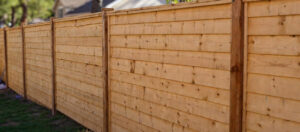
These upgraded wooden fences hold up beautifully in storm-prone regions:Wooden vs. Alternatives: A Quick Reality Check After a StormWhile vinyl fences flex and sometimes survive better than expected, they can shatter or scatter in extreme events. Wood, when properly reinforced, offers a natural aesthetic with solid performance. Here’s a side-by-side comparison of wood and vinyl after heavy wind exposure:Many homeowners find that a well-built wooden fence strikes the perfect balance: timeless beauty, privacy, and improved storm resistance.

Final Thoughts: Invest in Resilience Replacing your wooden fence in a hurricane zone isn’t just maintenance — it’s smart property protection. A properly installed, reinforced wooden fence can save you thousands in repeated repairs and give you peace of mind when the next storm rolls in.If you’re in a high-velocity hurricane zone (like parts of Florida), check local building codes for specific requirements on materials and design. Ready to upgrade? Consult a local fencing pro experienced in storm-resistant installations — the upfront effort pays off for years.Stay safe out there, and may your fence stand strong through whatever comes next!

Add comment

Your email address will not be published. Required fields are marked

from the blog

Related Articles