In hurricane-prone areas like Brevard County, Florida, a sturdy wooden fence isn’t just about aesthetics or privacy—it’s a frontline defense against powerful winds that can topple structures and scatter debris. With frequent storms battering the Space Coast, including Melbourne, Palm Bay, and surrounding communities, building a fence that withstands gusts up to 150 mph or more is essential. If you’re searching for a fence builder near me or fence company near me, understanding how to construct a resilient wooden fence using high-quality materials can save you time, money, and headaches. This guide dives into proven techniques, focusing on using 4×6 posts for the main fence line and beefier 6×6 posts for gates and corners to ensure maximum stability.
First, let’s talk about why wood remains a top choice for hurricane-resistant fencing in Brevard. Unlike vinyl or aluminum, which can bend or shatter under extreme pressure, properly treated wood offers natural flexibility and strength. Opt for pressure-treated pine or cedar, which resists rot, insects, and moisture—critical in our humid, salty coastal environment. These materials are readily available as fence materials in Brevard from local suppliers, making them cost-effective for DIY enthusiasts or when hiring fence professionals. Pressure-treated lumber is infused with preservatives to endure Florida’s relentless weather, but always select boards rated for ground contact to prevent premature decay.
The key to wind resistance lies in the foundation: the posts. For the standard fence line, 4×6 posts provide ample support without overkill. These dimensions offer a wider base than typical 4x4s, distributing wind loads more evenly. Dig post holes at least 3 feet deep—deeper than the standard 2 feet—to anchor them securely against uplift forces during hurricanes. Use concrete to set the posts, mixing it with gravel for better drainage and stability. Space them no more than 8 feet apart to minimize flexing between sections. For gates and corners, upgrade to 6×6 posts. These larger timbers handle the extra stress from swinging gates and directional wind shifts, acting as reinforced anchors for the entire structure. In Brevard’s sandy soils, this setup prevents leaning or collapse, a common failure point in weaker designs.
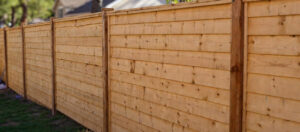
Design plays a pivotal role in durability. Incorporate horizontal rails—typically 2×4 or 2×6 boards—attached with galvanized screws rather than nails for superior hold. Position the bottom rail at least 6 inches off the ground to avoid water pooling, and add diagonal bracing on corners and gates using 2×4 lumber. This creates a truss-like system that dissipates wind energy. For pickets, choose 1×6 boards installed vertically with small gaps (about 1/8 inch) to allow wind to pass through, reducing sail-like resistance. A shadowbox or board-on-board style enhances privacy while promoting airflow, making it ideal for withstanding hurricane-force winds. If privacy is paramount, avoid solid panels; instead, stagger boards on alternating sides of the rails.
Installation requires careful planning to comply with local codes. In Brevard County, fences typically need permits if over 6 feet tall, and they must adhere to setback rules—often 4 feet max in front yards. Consult the county’s building department early, as requirements can vary by city like Melbourne or Titusville. Start by surveying your property to mark boundaries and utilities—call 811 to avoid underground lines. Once posts are set and cured (allow 24-48 hours), attach rails and pickets, ensuring everything is level and plumb. Seal all wood with a weatherproof stain or paint to protect against UV damage and salt corrosion, extending the fence’s lifespan to 20+ years with minimal maintenance.
Maintenance is straightforward but crucial for long-term resilience. Inspect annually for loose screws, warping, or termite signs, and reapply sealant every 2-3 years. After a storm, check for shifts and reinforce as needed. While DIY is feasible, many homeowners turn to fence professionals for precision, especially in challenging terrains like those near the Indian River Lagoon.
By prioritizing robust posts—4×6 for lines and 6×6 for high-stress areas—and wind-smart design, your wooden fence can stand strong against Florida’s fiercest weather. Whether you’re in Cocoa Beach or Rockledge, investing in quality fence materials in Brevard ensures peace of mind. If this sparks your project, search for a reliable fence builder near me or fence company near me to get started. With the right approach, your fence will not only survive hurricanes but enhance your property’s value and security for years to come.


 by admin